Featured · start this weekend
Lemonade Stand
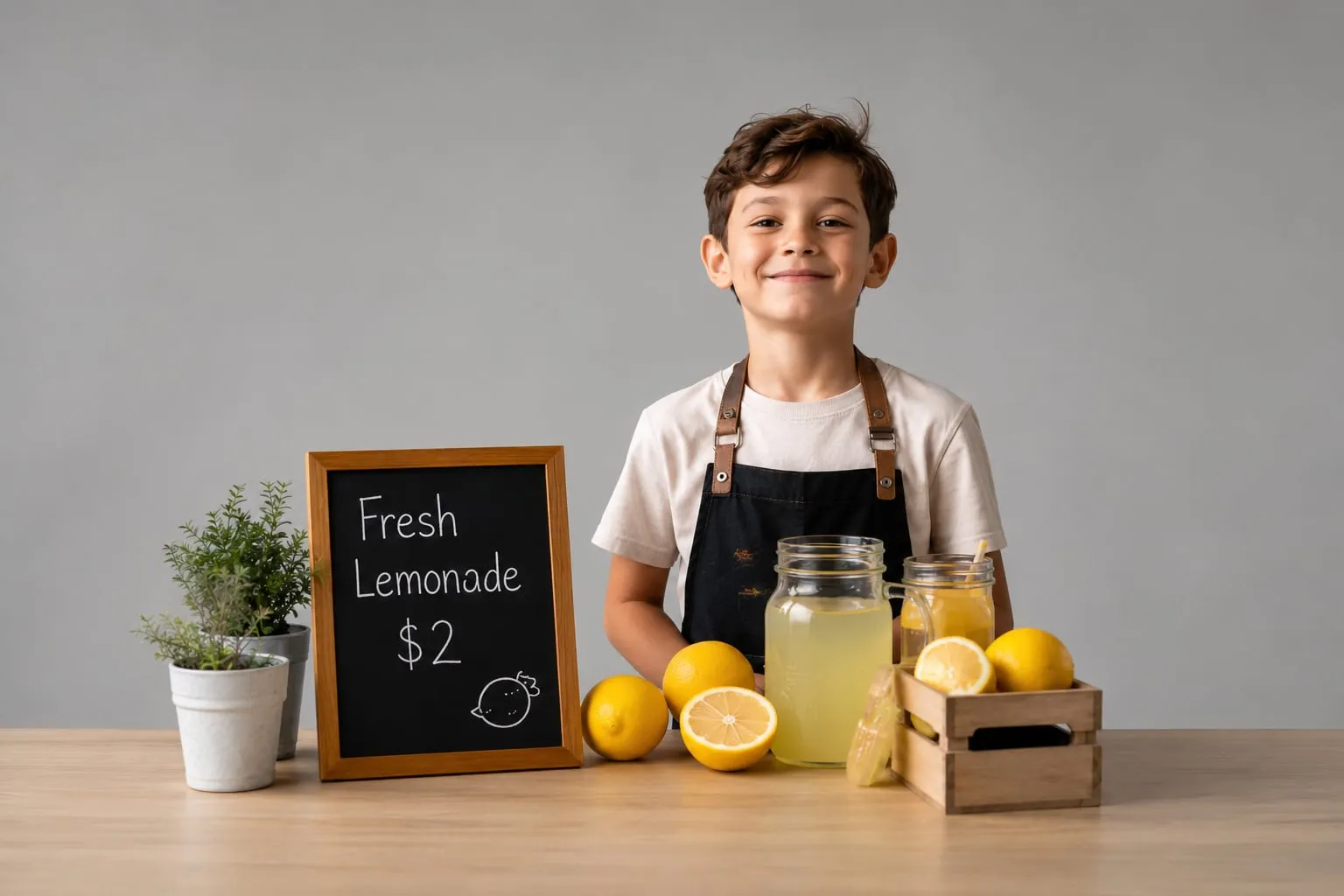
Cups, ice, a sign, a Saturday. The classic. Still one of the fastest ways to a real first sale.
Teaches: Pricing instinct. Reading customers. The shape of a real 'yes.'
Business Ideas for Kids
Real businesses your kid could start before next Saturday. What it costs to begin, what skill it builds, and which kid each one fits.
Get the WorkbookThe list
Featured · start this weekend
Cups, ice, a sign, a Saturday. The classic. Still one of the fastest ways to a real first sale.
Teaches: Pricing instinct. Reading customers. The shape of a real 'yes.'
30-minute weekday walks for one or two neighbors. A leash they already own. A phone in the back pocket.
Starter: $0 · Teaches: Showing up on time. The five-customers-but-they-keep-paying math of a service business.
Rake, bag, sweep. Saturday morning. Three houses on the same street, knock door to door.
Starter: < $10 · Teaches: Pitching face-to-face. Pricing for time, not for stuff. Working in the heat.
Bracelets, painted rocks, slime, perler beads, friendship bracelets — pick one and make 20.
Starter cost: $10–25
Teaches: Batching. Cost per unit. The first taste of "made it. sold it."
Bucket, sponge, hose, two cars in the driveway. Sell five wash slots to neighbors and parents' coworkers.
Starter cost: < $15
Teaches: Booking customers in advance. Working clean. Reading whether the price was right.
Design 5 stickers on a free tool, print them at home or a kiosk, sell at school or in the neighborhood.
Starter cost: $15–30
Teaches: Designing for a buyer who isn't them. Inventory. Listing prices and not negotiating.
Cookies, brownies, or muffins from a single batch. Bag, label, sell at a soccer game or library.
Starter cost: $15–25
Teaches: Recipe cost vs. sale price. Food rules. The taste-test loop.
Cover the neighbor's houseplants while they're on vacation. Daily check-ins, key on the hook.
Starter cost: $0
Teaches: Being trusted with someone else's house. Setting a weekly rate.
Beaded bracelets, simple earrings, charm necklaces. Sell to family first, then to a wider list.
Starter cost: $15–30
Teaches: Pricing handmade work. Photographing it well enough to share. Asking for the next order.
Soccer drills, basketball shooting, swim basics — 45-minute sessions for kids two years younger.
Starter cost: $0
Teaches: Teaching what you know. Earning respect from younger kids. Charging for time.
What it teaches
Starting even a small business teaches kids:
When the lemonade runs out and the customer is still standing there, the kid feels what responsibility actually is. Not in a worksheet. In real life.
Saying "would you like to buy a bracelet?" out loud is harder than it sounds. The first ten times are awkward. The eleventh is muscle memory.
Sign blew over. Customer wanted change for a twenty. Brother ate three of the cookies. Every small problem becomes a small win.
"I want to make $20" is a finish line a kid can see. They learn how to break that into cups, customers, hours — without anyone teaching it as a lesson.
The receipt kind, not the trophy kind. When a stranger pays a kid for something they made, the kid carries that around with them for weeks. It changes how they walk into the next ask.
Running a small business forces kids to make a lot of small calls — about pricing, about cash, about whether the little brother gets a free cookie. None of it feels like leadership while it's happening. All of it is.
Counting the day's profit in cash, then deciding how much to save, how much to spend on the next batch, and how much to give away — kids learn more in one Saturday than they will in a year of personal-finance chapters.
Need more than ten?
A printable companion to this list. Each idea shows how much money it takes to start and which skills it teaches. Free with your email.
See the 200+ idea bank →The workbook walks them through it — brainstorm, plan, build, launch — in nine phases that fit between piano lessons and dinner.